2025.11 KENDOJIDAI
Composition: Teraoka Tomoyuki
Photography: Nishiguchi Kunihiko
*Unauthorized reproduction or use of any images in this article is strictly prohibited.
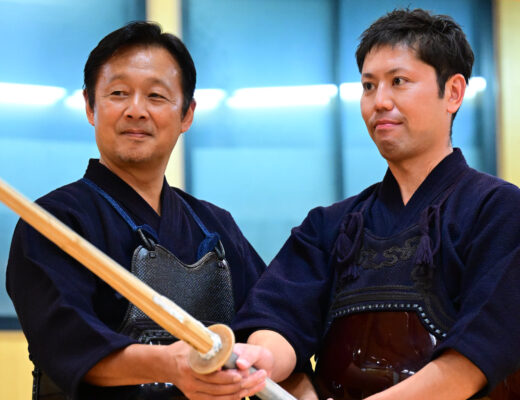
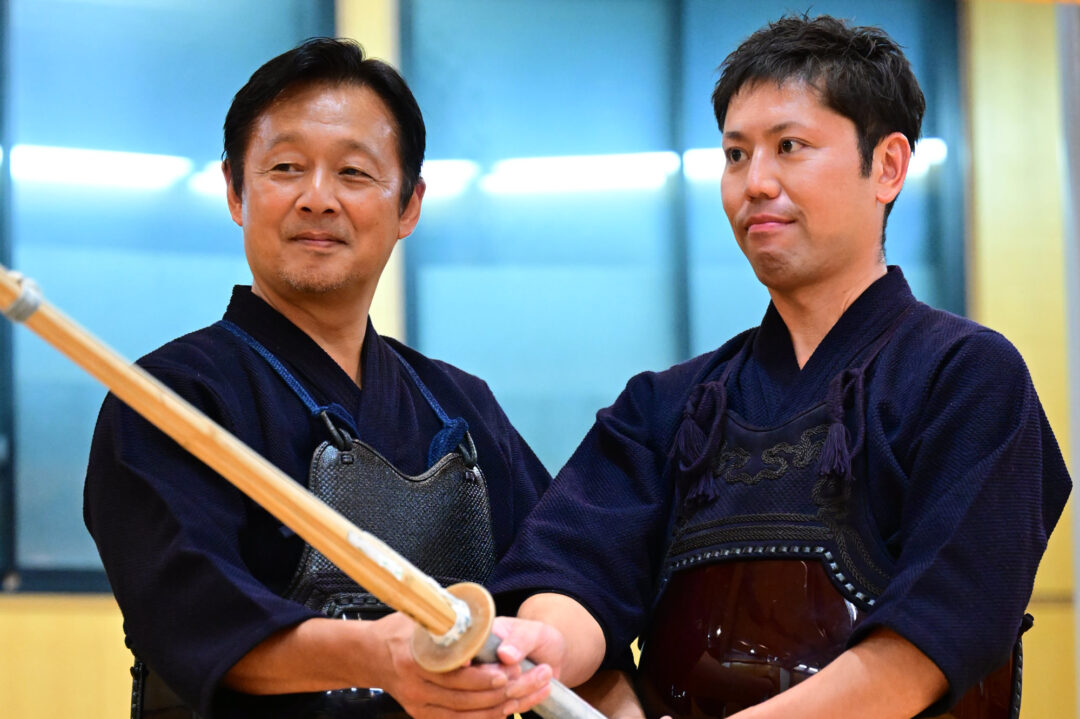
Kendo is often believed to be something you must start in early childhood, but that is not the case. To help people enjoy steady improvement and continue practicing Kendo for many years, Takahashi Kaiyu, Kyoshi 8th Dan and head of Hatsune Kenshijuku, explains key tips for long-term progress.
Takahashi Kaiyu, Kyoshi 8th Dan
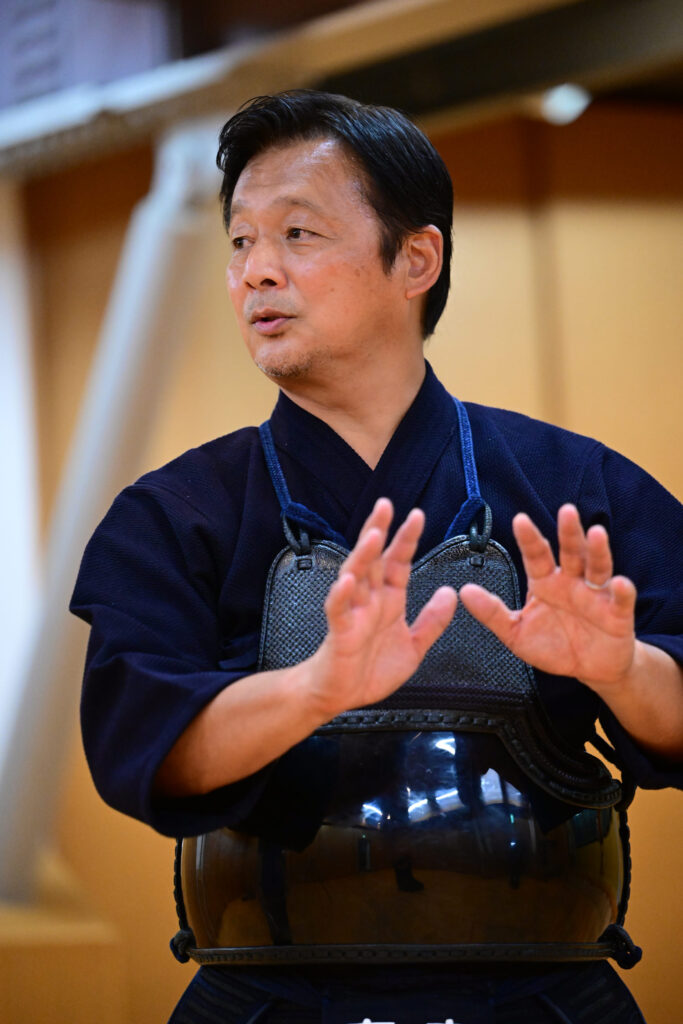
I run a Kendo Dojo called Hatsune Kenshijuku in Taito Ward, Tokyo. In recent years, not only children but also many adults, including people who want to begin Kendo later in life and those returning to Kendo after several decades, have started joining us. As someone who hopes to see Kendo become even more widely practiced, I am very happy about this trend.
Since this article is intended for adults who are starting Kendo, I would like to share several key points that I believe are especially important for those beginning as adults.
When considering whether instruction in Kendo should differ between adults and children, I believe that while the overall framework can remain the same, certain details do need to be adjusted.
Adults vary greatly in age and athletic background. Their levels of physical strength and flexibility differ widely, and even a small lapse in attention can lead to injury. If someone who has finally found the motivation to practice Kendo is forced to stop because of an injury, it may discourage them so much that they quit altogether. This is why it is important for adults to listen to their bodies as they progress, and for instructors to devise training methods that are gentle on the body.
Another point that must be clearly understood is the difference in how adults and children grasp new information. Children can learn Kendo through movement and feel, even without fully understanding it. Adults, however, tend to think first. In my experience, adults can practice with greater confidence when they are given clear explanations of the reasoning and purpose behind what they are learning.
Adults who begin Kendo are often seeking new opportunities for learning. In the midst of working the same daily routine as members of society, their motivation may resemble the feeling of wanting to obtain a new qualification. Gaining knowledge or skills outside of one’s everyday flow can enrich life. If someone comes to a dojo not only to move their body but also with the desire to learn, then an instructional approach that begins with clear reasoning may be more suitable.
One of the most effective ways to learn the principles of Kendo while also discovering its deeper appeal is through the practice of Nihon Kendo Kata. Many adults who start Kendo later in life tend to view kata merely as something required for promotion exams. However, once they experience the depth and pleasure of kata, they often develop an even stronger interest in Kendo itself. Maintaining this motivation is extremely important. To help practitioners continue learning kendo over the long term, I hope they will actively engage in practicing Nihon Kendo Kata.
Adults can often improve more quickly than children when they learn to move their bodies through understanding the underlying principles. To achieve this, it is important to develop skills through the process of “concept, demonstration, and practice.” By first learning the principle, then watching the instructor demonstrate it exactly as explained, and finally trying it themselves, adults can progress with a clear sense of understanding.
Rather than continuing training without explanation and being told that you will “get it someday,” building up small moments of “I did it!” gives a greater sense of achievement. This not only helps accelerate improvement, but also strengthens the motivation to continue.
Accumulating small moments of “I did it!”
Motivation through visible progress
Most adults who begin Kendo are eager to put on Bogu and start full training as soon as possible. However, it is not advisable to begin practice before they have mastered the basic movements. The frequency of their attendance varies, but in my Dojo, I usually spend about one to three months helping beginners acquire the fundamentals. Once they reach a certain level where improvement can be clearly felt, we begin training with Bogu.
However, the challenge here is maintaining the motivation to continue. When I was a child, some Dojos repeated basic movements without Bogu for one or even two years. If that approach were applied today, most people would likely drift away from Kendo. What is important is making the stages of progress visible and giving learners a clear sense of what lies ahead. With a clear outlook, even the repeated practice of simple basics can be done with a sense of purpose and enjoyment.
Earlier, I mentioned the importance of accumulating small moments of “I did it!” One tool I use to make these achievements immediately visible is a checklist. During practice, I always provide feedback such as “This part improved today,” and we check off the items that have been achieved. It may seem like a simple idea, but both adults and children feel happy when they can do something they previously could not. A checklist amplifies that sense of joy and motivates them to tackle the next item.
Another important point for adults who begin Kendo is warming up and cooling down. Cooling down is especially crucial. Adults tend to have stiffer muscles than children, and pushing the body too hard increases the risk of injuries such as Achilles tendon or lower-back problems. Setting aside time for cooling down after practice helps prevent injuries and ensures that daily training can continue without interruption.
Breaking instruction into small steps
Helping learners form clear images
As I mentioned earlier, the pace of improvement varies depending on how often a person can attend practice. In my Dojo, I generally create a three-month plan in the following manner.
Month 1
Goal: Perform basic etiquette, Kamae, and Suburi
- Can perform standing and seated bows
- Can hold the Shinai correctly
- Chudan-no-kamae is stable
- Can perform footwork (forward, backward, and opening steps)
- Can do Men-suburi (20–30 swings)
- Can produce a strong Kiai (voice)
Month 2
Goal: Wear Bogu and perform basic strikes
The rest of this article is only available for Kendo Jidai International subscribers!