KENDOJIDAI 2026.3
Photography: Nishiguchi Kunihiko
Interview: Teraoka Tomoyuki
*Unauthorized reproduction or use of any images in this article is strictly prohibited.
Kendo is often thought to be something that must be started in early childhood, but that is not necessarily true. Adult beginners are an indispensable presence when we consider the future of Kendo. Nabeyama Takahiro Kyoshi 8th Dan, who has devoted many years to teaching at the University of Tsukuba, explains how to continue enjoying Kendo and improve steadily over the long term after taking it up out of passion.
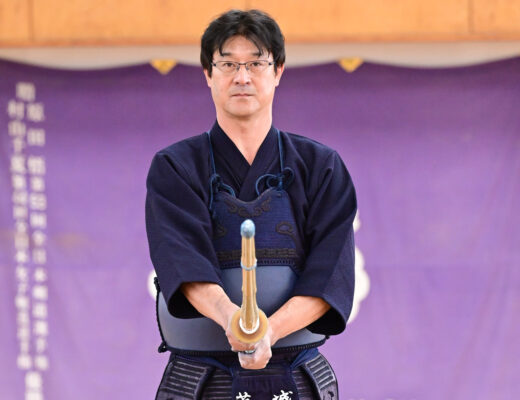
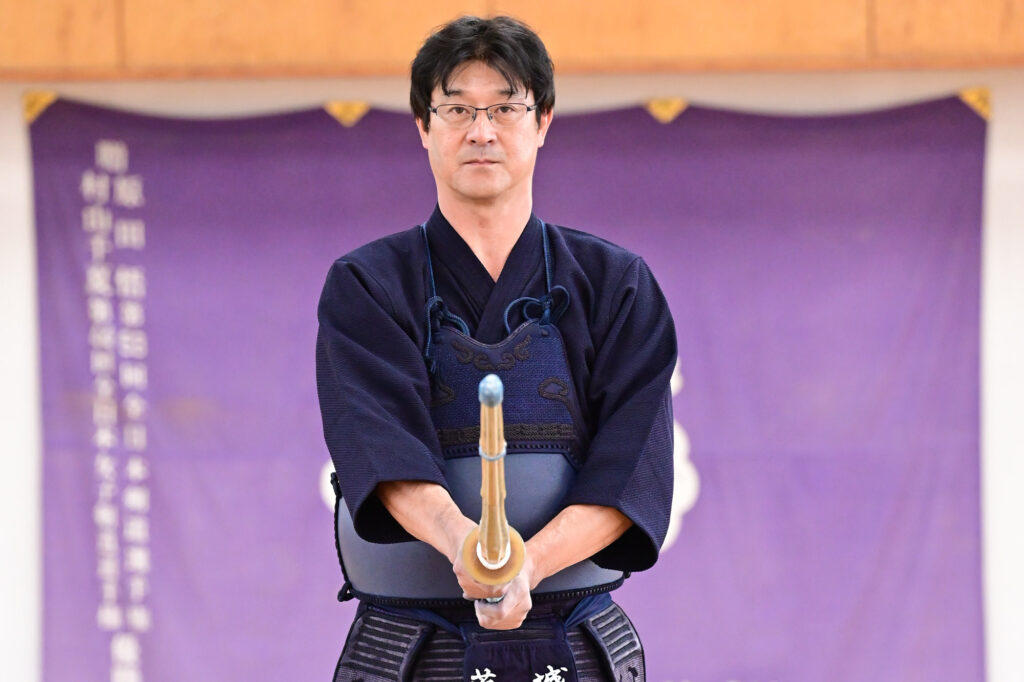
Nabeyama Takahiro, Kyoshi 8th Dan
Lower-Body Movement
For adult beginners, the most important point is learning to move the body forward without breaking posture or balance. Without this ability, it becomes difficult to achieve true Ki-Ken-Tai no Ichi later on.
In my instruction, I first place emphasis on the lower body and help students develop Fumikomi based on proper weight transfer. Specifically, starting from a natural stance with both feet on the ground, the right foot is lifted while the center of gravity shifts onto the left leg. From there, the hips open slightly as the body moves forward, allowing the center of gravity to travel smoothly ahead.
In many Dojo, you may hear instructions such as “step your foot forward” or “lift your foot higher.” However, even if you try to push the foot forward, the body will not move unless the center of gravity shifts. Likewise, lifting the foot too high causes the body to lean backward, which prevents smooth weight transfer.
What truly matters is not simply stepping forward or lifting the foot high, but moving the body itself forward. This sense can be developed through lower-body-focused training like this. Because it can be practiced effectively on one’s own, I believe it is an ideal starting point for beginners.
Coordination of Hands and Feet
One of the first major hurdles adult beginners encounter is coordinating the hands and feet. Many practitioners feel that they have a clean striking form in their minds, yet receive corrections from instructors or fellow practitioners. When they actually watch footage of themselves, they often realize that their movement looks very different from what they imagined.
I believe the main reason this coordination is so difficult is that the upper body moves in two actions while the lower body moves in one. Specifically, the upper body must perform both the lift and the downward swing of the Shinai, while the lower body carries out the forward movement and Fumikomi based on weight transfer. Linking these elements together smoothly is extremely challenging.
This kind of coordination does not happen suddenly through regular Keiko alone. Dedicated practice aimed at achieving synchronization is necessary. For that reason, alongside the Fumikomi training mentioned earlier, I have students begin with both hands already raised and then practice linking the upper and lower body movements. In this way, the downward swing and the Fumikomi each become a single action, making coordination easier. From there, the goal is to gradually perform the lifting and the downward swing together as one continuous movement.
Pulling the Left Foot In
The rest of this article is only available for Kendo Jidai International subscribers!