KENDOJIDAI 2026.3
Photography: Nishiguchi Kunihiko
Interview: Teraoka Tomoyuki
*Unauthorized reproduction or use of any images in this article is strictly prohibited.
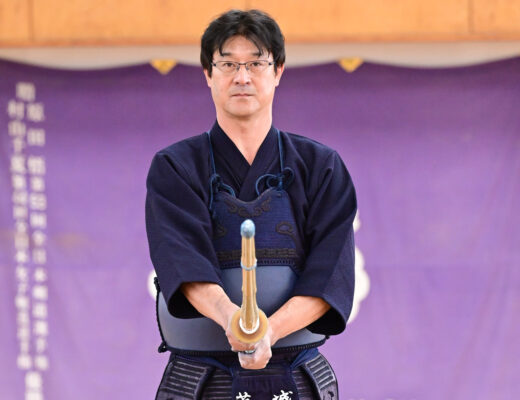
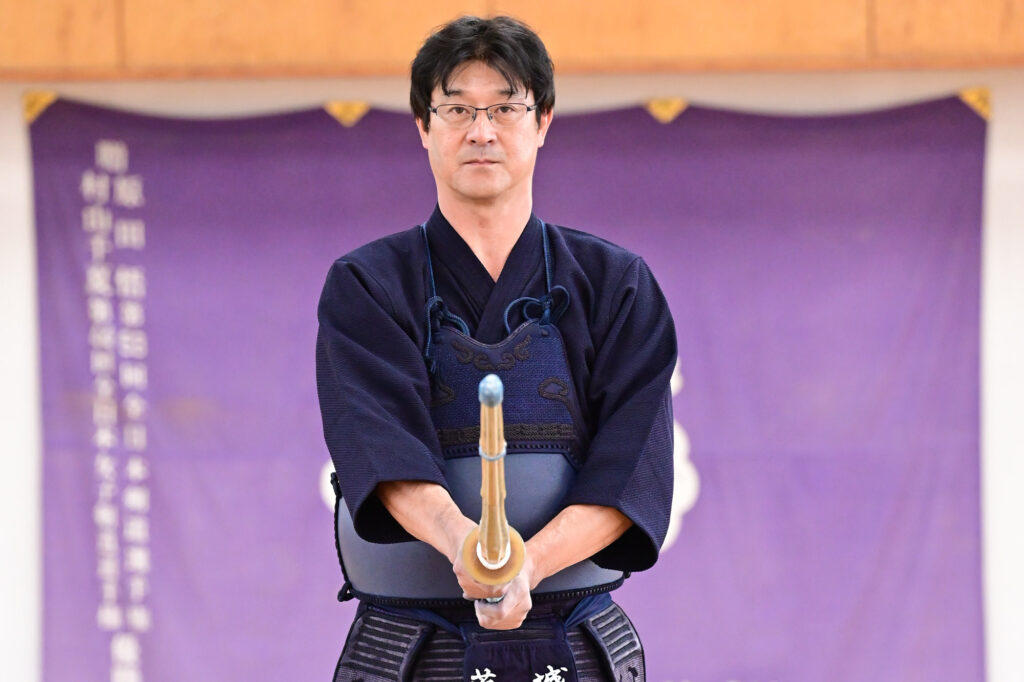
Kendo is often thought to be something that must be started in early childhood, but that is not necessarily true. Adult beginners are an indispensable presence when we consider the future of Kendo. Nabeyama Takahiro Kyoshi 8th Dan, who has devoted many years to teaching at the University of Tsukuba, explains how to continue enjoying Kendo and improve steadily over the long term after taking it up out of passion.
Nabeyama Takahiro, Kyoshi 8th Dan
Each person has their own way of engaging with Kendo. From childhood through youth, the joy often comes from winning matches. As one grows older, using Dan examinations as a guide, feeling personal growth through daily Keiko can become a powerful source of motivation.
So then, where should adult beginners find their sense of joy and fulfillment? First of all, I hope they can feel a sense of happiness simply in having encountered Kendo and taken on a new challenge. As adults, daily life often keeps us so busy that it becomes difficult to start something new. Yet choosing to take that step and ignite that motivation within oneself is, in my view, already a positive achievement in life.
Compared with many other sports in the world, Kendo has a number of distinctive characteristics. One of them is that people of a wide range of ages can enjoy it. As mentioned earlier, each person approaches Kendo differently, but it is well suited to many purposes, such as “deepening one’s sense of spirituality through a traditional Japanese Budo,” or “regaining physical sharpness that may have faded with age and maintaining good health.”
Furthermore, people of all ages and genders can train together, building relationships beyond differences in age or background. This is one of the great benefits of practicing Kendo. In particular, I hope that adult beginners will find joy in these aspects and, through them, strengthen their motivation to continue.
Think of the Upper Body and Lower Body Separately
Kendo is often said to be something you must start learning from early childhood in order to become skillful, but I do not believe that is necessarily true. I have been involved in Kendo instruction at the University of Tsukuba for many years, where I teach not only top athletes but also many students who are complete beginners. I also frequently instruct members of the general public through open courses aimed at promoting Kendo. Through these experiences, I have come to feel that the current Keiko environment itself can become a significant hurdle for adult beginners.
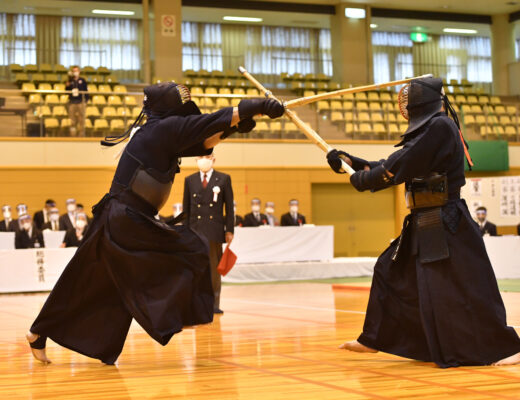
In general, coaching should progress step by step, moving from “easy to difficult,” “slow to fast,” and “large movements to smaller, more refined ones,” gradually transitioning from simple actions to more complex techniques. However, in the typical Kendo training environment, it is often difficult to follow this process.
In particular, adult beginners are rarely guided carefully through the fundamentals in the same way that children are. After learning a certain level of basic movement, they are often asked to put on Bogu and move directly into Jigeiko. As a result, they struggle to acquire the more complex technical aspects of Kendo, and their movements can become awkward, with the hands and feet failing to work in harmony.
However, if we change our perspective, it also means that adult beginners can develop refined and well-formed Kendo by approaching technical improvement in a structured and logical way. One of the greatest challenges for beginners is coordinating the vertical motion of raising and lowering the Shinai with the forward movement of the body.
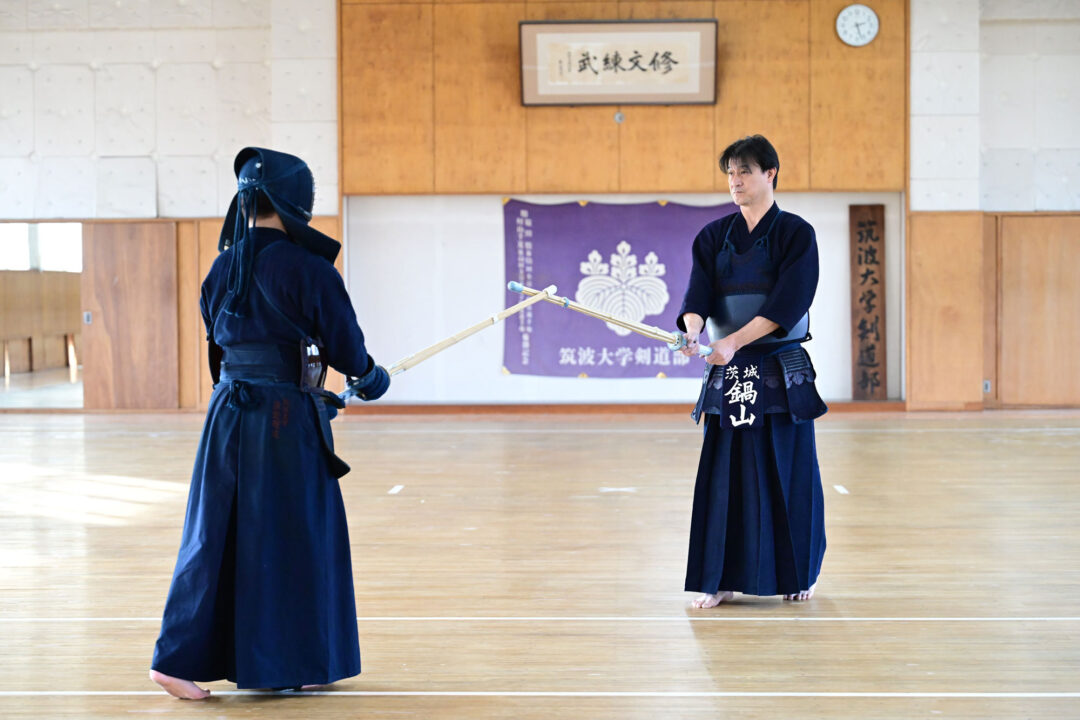
When I teach, I first focus thoroughly on training the lower body to move forward correctly. After that, I work on upper-body practice, such as lifting and lowering the Shinai, and finally integrate these elements into more practical, match-like movements. For adult beginners who feel their technical progress has stalled, I recommend practicing lower-body and upper-body movements separately at first. By mastering correct mechanics individually, they can then connect those skills more effectively to actual Keiko.
Young practitioners often develop coordinated movement naturally through repeated Keiko, even without consciously following the kind of step-by-step process I described earlier. By observing others and imitating what they see, their hands and feet gradually come into harmony. Adults, however, do not progress in the same way. Simply repeating Jigeiko over and over will not necessarily lead to movements that truly resemble proper Kendo. At the same time, adults cannot always devote long hours solely to building fundamentals. In such cases, what becomes essential is the process of “understanding.”
If one clearly understands the theory behind each technique and then applies that understanding in Keiko, it is possible to acquire skills in a shorter period than younger practitioners. Adults have their own way of growing and improving. Recognizing this allows them to progress steadily without unnecessary frustration or impatience.
Understanding Body Movement Through Video
The rest of this article is only available for Kendo Jidai International subscribers!