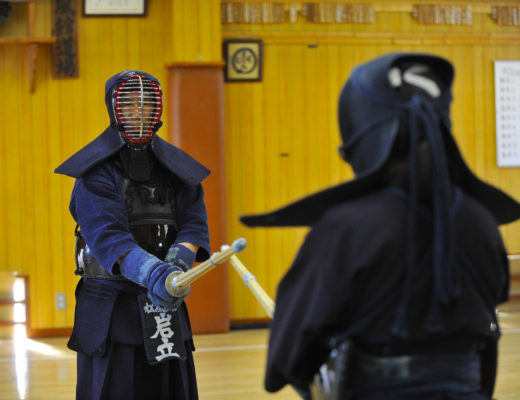
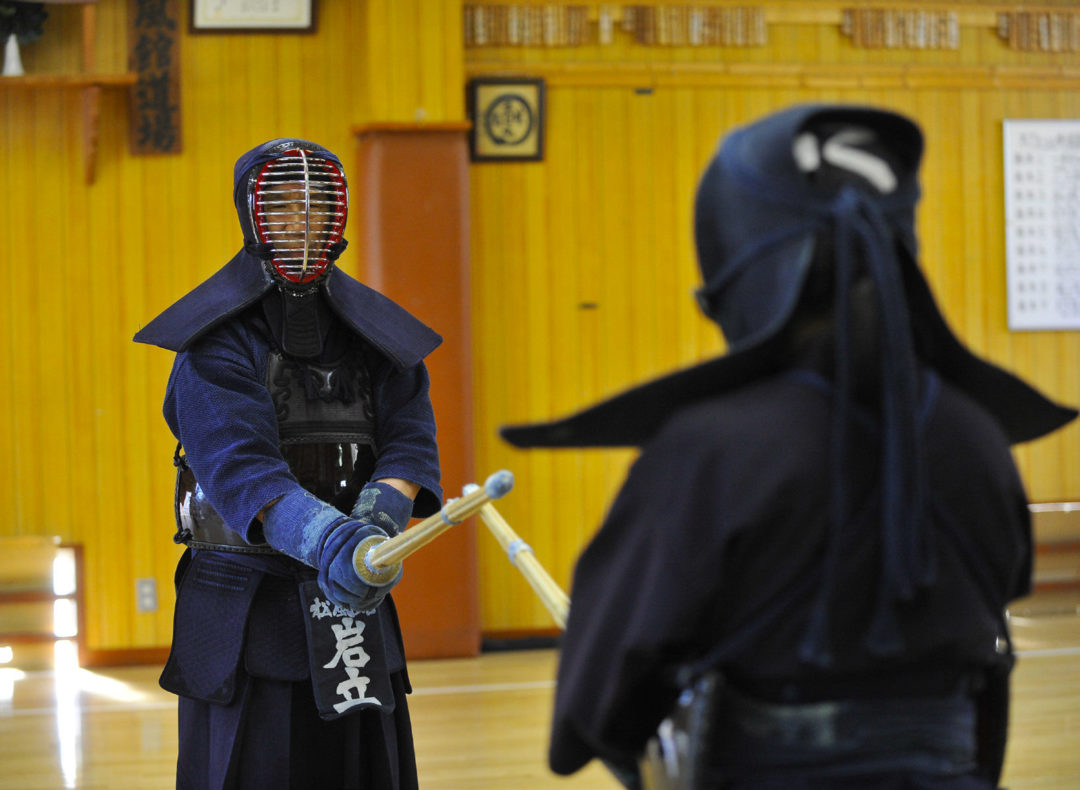
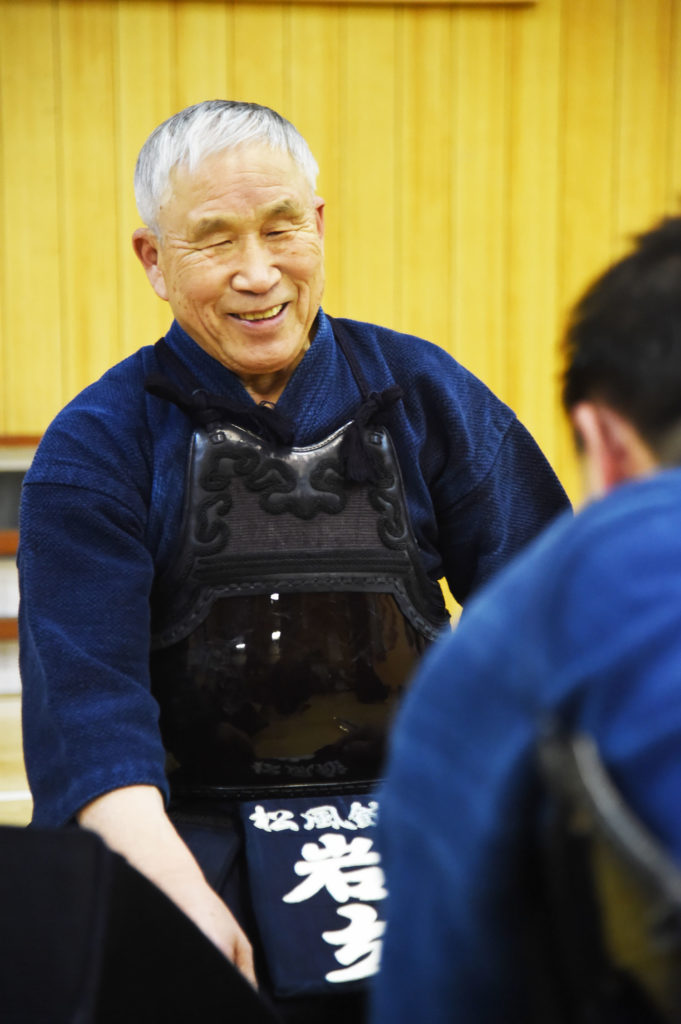
Iwatate Saburo, Hanshi 8th Dan
The Examination Begins Before Entering the Venue
A dan examination is an opportunity to have one’s Kendo evaluated by a third party — the examination panel. Unless the examiners recognize one’s Kendo as being worthy of the rank in question, one cannot pass.
There are many people who come to my Dojo aiming to pass their dan examinations. Of course, accumulating Keiko is essential, but here I would like to speak about the proper mindset and preparation immediately before the examination itself.
There are some practitioners who, despite having trained diligently, are unable to demonstrate even half of their true ability on the actual day. When I observe such people, I often find that the problem lies in their preparation just before the examination.
Do you have a clear understanding of the transportation required to reach the venue?
If the venue is familiar, it is relatively easy to estimate travel time and logistics. However, when traveling to regional examinations outside major urban areas, special caution is necessary. Unlike the Tokyo metropolitan area, transportation networks may not be well developed, and one may need to rely on taxis.
Yet taxis are not always readily available in such places. As a result, many people become flustered because they cannot find a taxi when they need one.
When preparing for a dan examination, the most important thing is to create an environment in which you can focus entirely on the examination itself.
I believe the very first step toward that is confirming your transportation route from home to the venue.
There was once a practitioner from Yamagata who passed the 7th dan examination. I heard that one year earlier, he had actually traveled to the venue in advance in order to build a clear mental image of the day itself.
Of course, it may be difficult for everyone to prepare to that extent. However, nowadays it is easy to obtain local information through the internet, so in order to avoid unnecessary stress, you should gather as much information about the venue as possible beforehand.
In addition, your Bogu, Shinai, Keikogi, and Hakama should absolutely be prepared the day before departure.
It may sound unbelievable, but I have heard many stories of people forgetting to pack their Kote, or even forgetting their Keikogi entirely.
Avoid Idle Conversation.
Use Deep Breathing to Fill the Lower Abdomen with Energy.
On the day of the examination, make sure to arrive at the venue with plenty of time to spare. If you arrive at the last minute, your mind will naturally become unsettled.
As an examiner myself, the very first thing I observe is the attitude and demeanor of the candidates inside the venue.
Those who enter the examination with the resolve of, “I am about to have my Kendo evaluated,” carry themselves without openings or carelessness.
The dignity and quiet confidence that can only come from years of fully throwing oneself into Keiko naturally reveal themselves through a person’s posture, movements, and demeanor.
At examination venues, I often see people engaging in unnecessary conversation. Of course, there may be many acquaintances whom they have not seen for a long time, but it is wiser to limit oneself to simple greetings.
You have come for an examination, not for a reunion.
I also believe it is important to avoid unnecessary interaction as much as possible — even something as simple as facing a wall and avoiding eye contact with others can help maintain concentration.
When I passed the 8th dan examination, I repeatedly took deep breaths inside the Butokuden in order to calm my mind.
It is important to use abdominal breathing to firmly settle one’s Ki into the lower abdomen, place strength into the heels, and prepare oneself for the actual examination.
Once you have changed into your attire, have someone check your appearance and equipment.
Are your Keikogi and Hakama being worn properly — with the collar correctly positioned around the neck and the Hakama secured properly at the waist? Your Hakama does not need to be brand new. However, it should be clean, properly washed, and have well-formed pleats. Examiners are also observing whether your Bogu is being worn correctly and in the proper position.
Ideally, one should have an attendant accompanying them to the examination. If you have someone with you, they can perform a final check of your appearance and equipment. Even today, venue staff may also assist with this, so before the examination, you should always have a third party inspect your attire.
There are surprisingly many people whose Keikogi bunches awkwardly at the back, whose Tenugui protrudes visibly from the Men, or whose Men-himo lengths are uneven.
In addition, please take great care with your valuables.
Unfortunately, theft incidents inevitably occur at examination venues.
To Fully Commit to and Finish One’s Best Technique with Body and Soul
The rest of this article is only available for Kendo Jidai International subscribers!