2025.7 KENDOJIDAI
Photography: Nishiguchi Kunihiko
Interview: Tsuchiya Tomohiro
*Unauthorized reproduction or use of any images in this article is strictly prohibited.
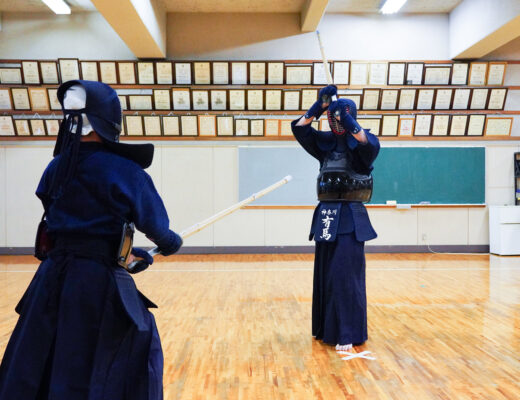
In Jodan, where the tip of the Shinai does not meet the opponent’s, distance must be judged through feeling and intuition. By winning the contest of Seme and closing the distance with delicate control, the right opportunity to strike is created. We spoke with Arima Sensei, Kyoshi, about Maai and the moment of opportunity in Jodan.
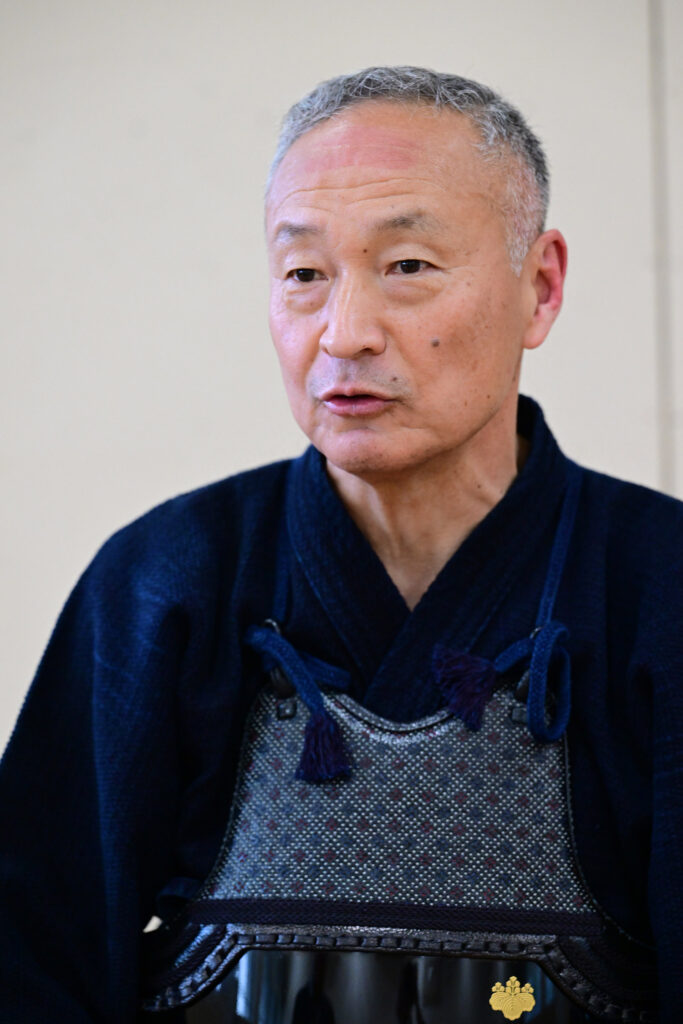
Arima Hiroshi, Kyoshi 8th Dan
Judging Maai Through Feeling and Experience
As you know, in Jodan, the tips of the Shinai do not touch or cross as they often do when both practitioners are in Chudan. Because of this, the striking distance must be judged through visual sense and accumulated experience. Of course, there are times when both players begin in Chudan and one then shifts to Jodan, or when the opponent’s Shinai is struck during the exchange. However, these actions are not used to measure distance itself. Whether the opponent is near or far, or whether they have entered one’s own striking distance, is ultimately determined by feeling and intuition.
I have never directly compared it with the striking distance in Chudan, but since strikes in Jodan are delivered with one hand, it may be physically possible to strike from farther away. However, opponents are well aware of this. For that reason, it cannot necessarily be said that the ability to strike from a longer distance is an advantage. Because opponents are cautious, there is always the possibility that the attack will be countered or avoided.
For that reason, what I try to do is close the Maai gradually and with great delicacy. If I enter too boldly, it becomes easier for the opponent to target that movement. When I was younger, even if I stepped in strongly and the opponent launched an attack, I could respond with footwork and reflexes. Sometimes I would intentionally do this to gauge the opponent’s reactions. But as I have grown older, I avoid forcing such situations. Instead, I focus on applying pressure little by little, using Okuri-Ashi and small, careful steps.
As the distance closes, the opponent may react by applying Seme, retreating, or moving to the side. Some opponents prefer to evade mainly with their hands, which can feel easier to deal with. However, those who are skilled in Maai may deliberately draw you in, invite your attack, and then avoid it before countering. Because of this, it is essential to observe carefully and judge the situation with the utmost attention.
Gaining the Advantage in Seme and Creating Instability
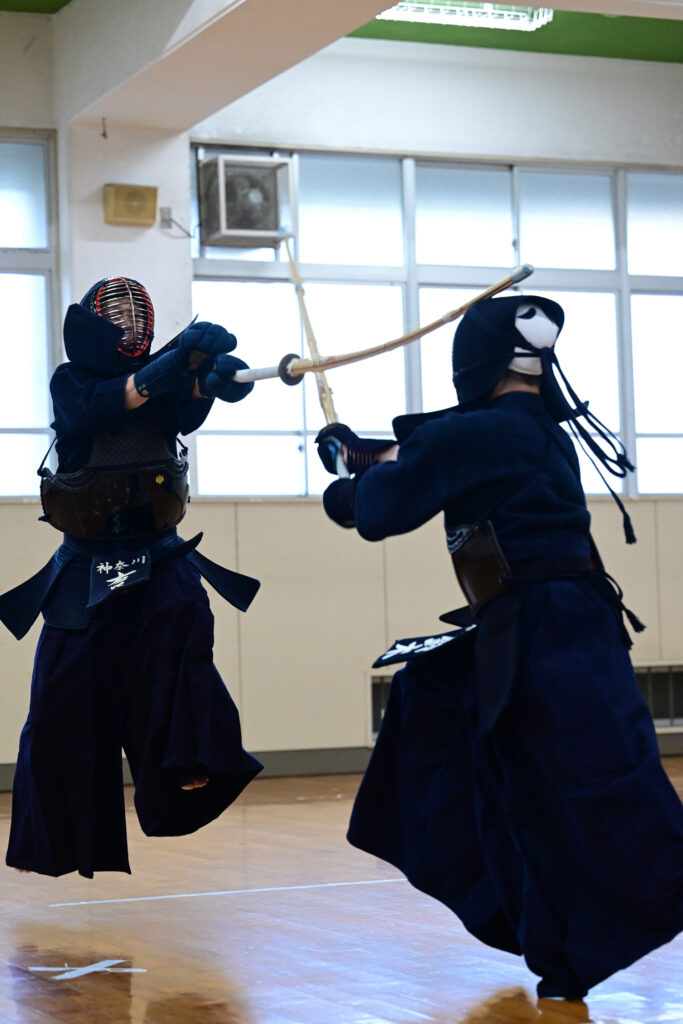
Within this process of Seme, I occasionally introduce subtle variations to observe the opponent’s reactions. Once I feel that I have gained the advantage in Seme, I begin to initiate attacks and build the exchange from my side, applying further pressure to unsettle the opponent.
For example, when the opponent becomes wary of Kote, the Men opens. Conversely, when the opponent focuses on protecting Men, an opening appears at Kote. My goal is to apply Seme in a way that provokes these kinds of reactions. When considering striking distance, Kote, as in Chudan, is physically closer than Men. However, it is not as simple as saying Men for long distance and Kote for close distance.
Another common principle is to induce the opponent to launch a forced attack, then target the very moment when that movement begins.
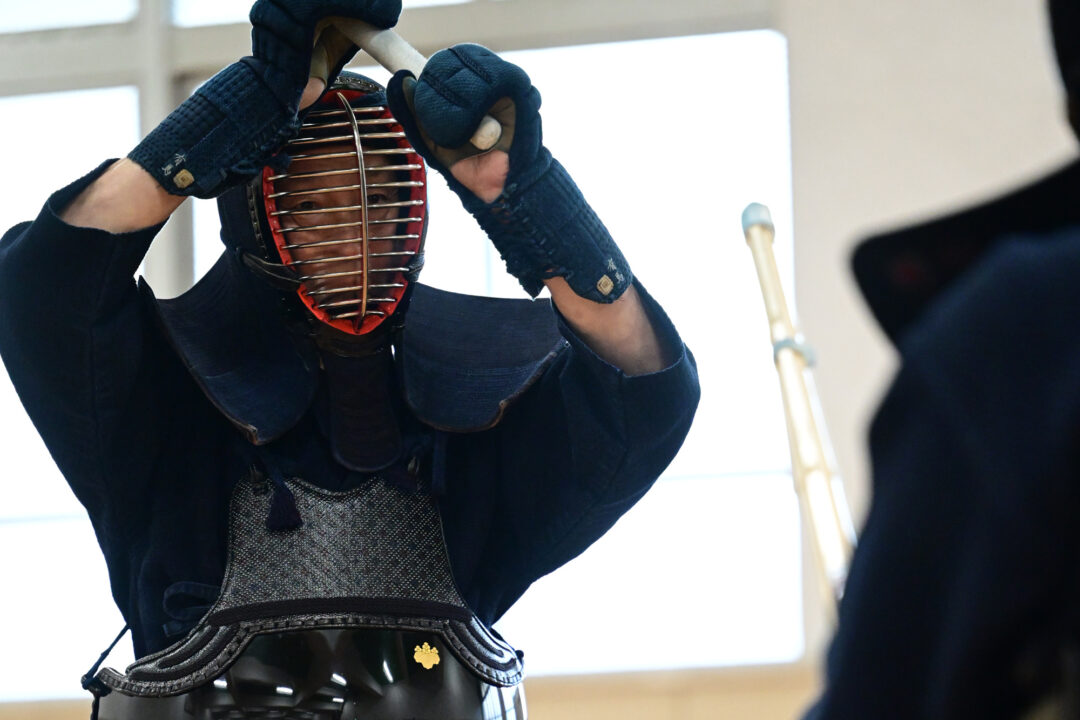
In Jodan, the tip of the Shinai is positioned above and behind the head. As a result, once the opponent enters striking distance, the opponent’s Shinai is actually closer to you than yours is to them. When the situation reaches that point, you often become preoccupied with simply trying to avoid the attack. That is why it is essential to deal with the opponent before allowing them to enter that range.
The key lies in gaining the advantage during the stage of Seme. The idea is to create a moment of instability in the opponent, to cause their mind to settle or hesitate. When that happens, their posture may begin to break down. For example, the hands may rise slightly, creating an opening. Or, even though you hold the advantage, the opponent may launch an attack. In such moments, it becomes possible to capture the Debana, the very instant when the opponent begins to move.
In other words, Maai and the moment of opportunity are not determined solely by one’s own distance. Because the opponent is constantly moving as well, the physical distance is always changing. They are relative concepts that depend on whether you are applying Seme or being pressured by the opponent. The mental aspect also plays a major role.
If this judgment is mistaken, you may launch a technique at a moment that is not truly your opportunity, only to be countered or overwhelmed. Ideally, on the other hand, the opponent moves when it is not their opportunity, allowing you to take advantage of that moment.
Since this spring, my work environment has changed, and there are times when it is difficult to practice as much as I would like. Even so, through exchanges with my opponents, I want to continue pursuing training that allows me to express my own Kendo—grasping my proper striking distance and delivering a strike at the right opportunity.
Of course, it is important to keep moving forward in training, but in recent years I have also come to feel that looking back and examining how things were done in the past can be very beneficial for one’s Kendo. It is a process of revisiting the teachings I received from my teachers in the past and recreating the sensations I felt when I was performing well, then giving those experiences clear reasoning and understanding.
Even while aiming for ten, one must sometimes return to one and look again from the beginning. Because Kendo is a lifelong path of training, I believe this kind of reflection is essential.
Launching Shikake-Waza Without Showing Intention
The rest of this article is only available for Kendo Jidai International subscribers!