
2026.10 KENDOJIDAI
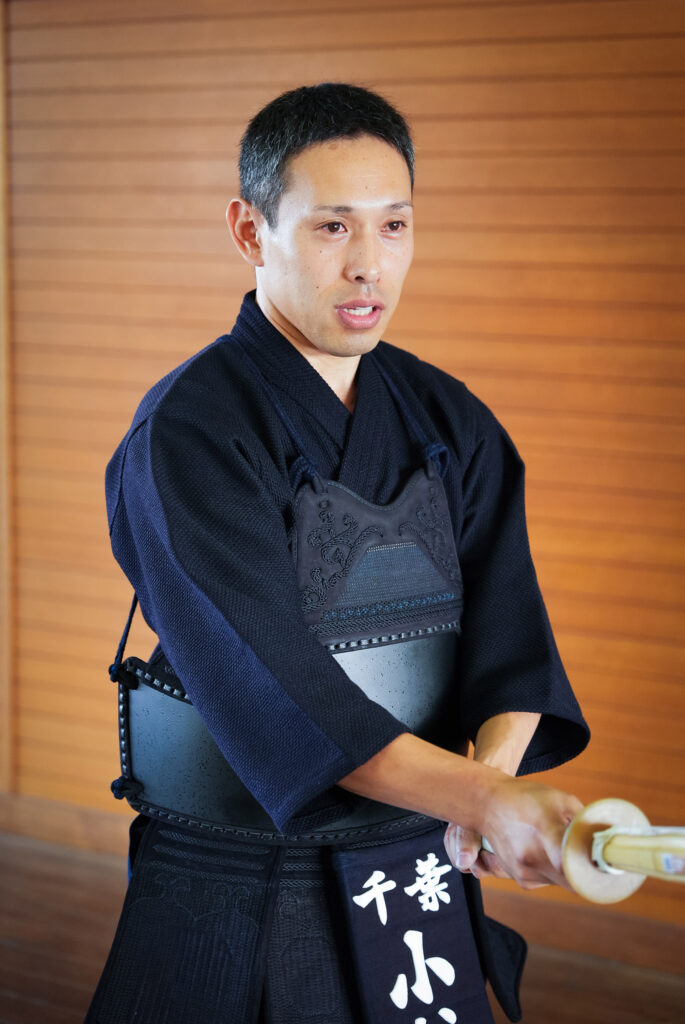
Kotani claimed his long-awaited first victory at the 13th All Japan Invitational Kendo 7th Dan Championship. Reflecting on the day, he says he was reminded once again of the importance of staying true to his own kendo.
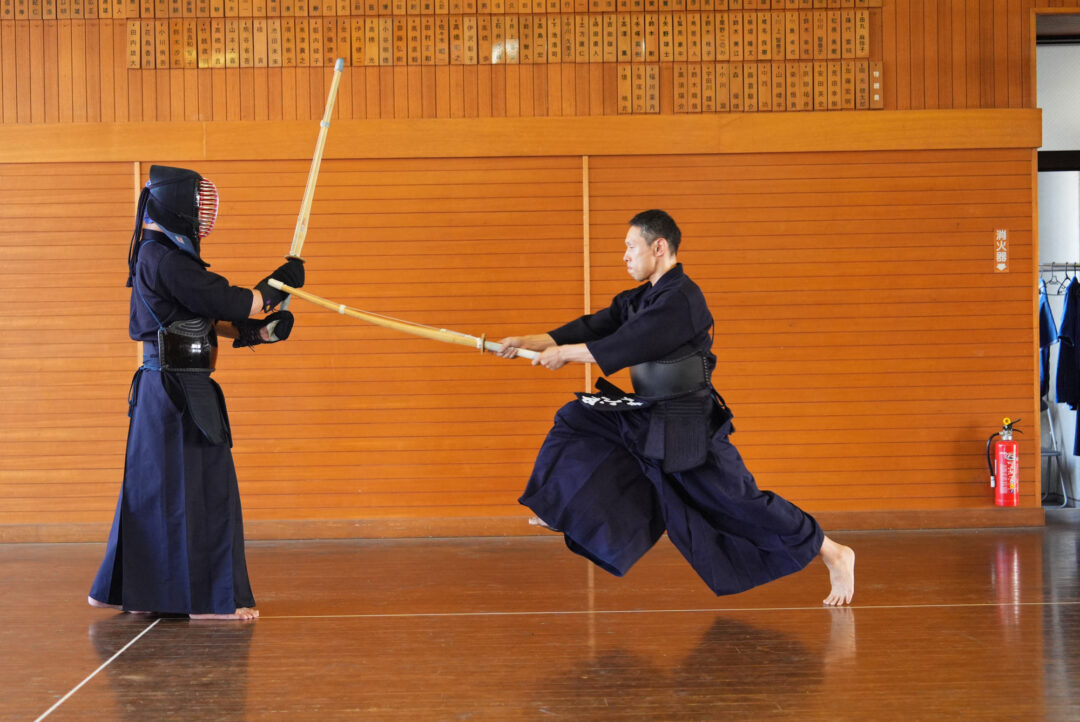
“I believe the foundation of my kendo lies in my footwork,” says Kotani. We asked him to explain his approach to footwork and striking techniques.
Kotani Akinori
I feel that the foundation of my kendo lies in my footwork.
After graduating from the International Budo University in my home prefecture of Chiba, I had the opportunity to join the Chiba Prefectural Police. During my university years, our team reached the quarterfinals of the All Japan University Kendo Championship, but I was unable to qualify for the national championship as an individual. That disappointment motivated me to challenge myself in the demanding world of police kendo.
The world of competitive kendo is unforgiving. Any weakness or opening will be exploited by your opponent. From my very first year as a Tokuren member, I experienced firsthand just how demanding police kendo could be. This was especially true whenever my feet stopped moving. The speed and power of my opponents were tremendous, and I was overwhelmed.
That experience led me to focus on taking the initiative, practicing aggressive kendo, and actively seeking to score ippon. To achieve this, I began paying particular attention to my footwork and finding ways to improve it.
I felt that I needed to improve my offensive capabilities to score ippon, so I focused on expanding the range of my seme, particularly by applying pressure high and low, as well as on the omote and ura sides.
Along with moving my shinai up, down, left, and right, I experimented with different ways of applying pressure through my footwork, moving forward, backward, and sideways, and sometimes entering at an angle. By varying my approach in this way, I aimed to induce the four kendo prohibitions (shikai) in my opponents: surprise, fear, doubt, and hesitation.
This is something I continue to emphasize in my kendo today.
At the All Japan Invitational Kendo 7th Dan Championship this June, I remained conscious of the importance of keeping my feet moving. In fact, each of the techniques I successfully executed came from a different approach to seme.
My strength lies not only in striking men straight on, but also in applying pressure from the ura side, or making my opponent conscious of an attack from ura before switching to omote.
I believe that footwork itself is directly connected to seme. The ability to step in powerfully and complete a strike in a single motion, as well as the flexibility to move in and apply pressure from either the omote or ura side, can make an opponent feel threatened.
With this in mind, I believe that applying pressure from different directions—forward, backward, left, and right, as well as from omote, ura, high, and low—can create uncertainty in my opponent’s mind about when I will attack and from what distance. By creating this uncertainty, I believe I can find opportunities to compete effectively against my opponents.
As for applying pressure from the ura side, I personally find it difficult to respond when an opponent takes my center from ura. Since I am less accustomed to dealing with this than with pressure from omote, it can be challenging to counter, for example, by pressing back against the opponent’s shinai.
I believe that making an opponent feel uncomfortable or find me difficult to deal with can also trigger the shikai, the four mental obstacles of surprise, fear, doubt, and hesitation.
In a match, it is not easy to create ideal conditions in which you have successfully broken your opponent’s defenses through seme and are fully prepared to strike. That is why, in addition to learning various approaches to seme and different ways of using my footwork, I also work on developing the ability to execute a decisive strike even when I am not in an ideal position. This includes practicing how to follow through with my strikes and how to bring my left foot forward.
Another important aspect of applying seme through footwork is to keep my feet moving. By maintaining constant movement and always seeking to take the initiative, I can continue applying pressure and create opportunities to strike.
Since this requires continuous foot movement, it can be tiring if you are not accustomed to it. That is why it is also important to develop basic endurance and muscular strength. Now that I am over 40, I am aware that I can no longer launch myself forward as powerfully as I once could. For this reason, I make a conscious effort to maintain and improve my physical fitness and strength through regular training.
As an aside, I also try not to let my opponents notice any decline in my physical fitness or strength. If they sense that I am tired or struggling physically, they may use that to their advantage. Such negative feelings can also easily affect my mental state during a match.
In the following sections, I would like to explain how I actually use my footwork when executing successful strikes.
Moving to the Left from Ura to Strike Kote and Men
The rest of this article is only available for Kendo Jidai International subscribers!