2026.10 KENDOJIDAI
Interview: Yanagida Naoko
Photography: Sasai Takamasa
Kotani Akinori
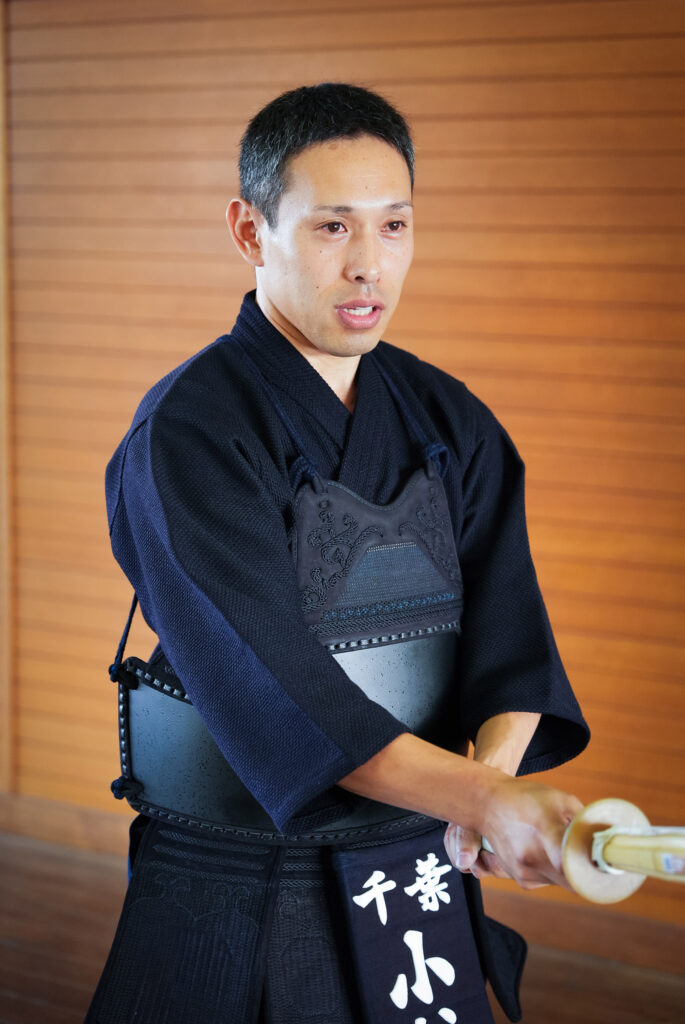
Competing with His Signature Men Strike
Fully Committing to His Attacks in the Final
“Of course, I tried not to think about having finished as runner-up in the previous tournament. On the day of the competition, I didn’t feel much pressure and was able to focus naturally on each match. I was also in good physical condition.”
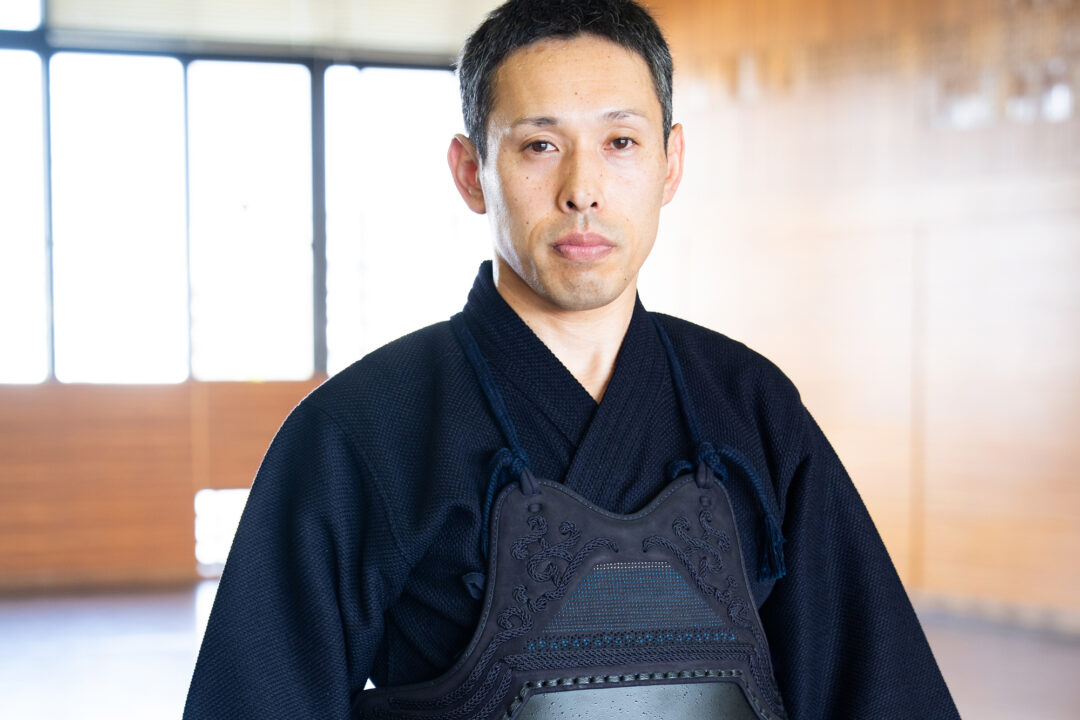
Kotani Akinori claimed his first title at the 13th All Japan Invitational Kendo 7th Dan Championship. In the previous tournament, he had reached the final for the first time, only to lose to a men-kaeshi-do strike in encho (overtime). No doubt he was determined to go one step further this year.
In March, he was appointed head coach of the Chiba Prefectural Police Tokuren (Special Kendo Training Unit). Through regular practice with younger members, he had been able to further strengthen himself both physically and mentally.
The All Japan Invitational Kendo 7th Dan Championship brings together 16 selected 7th Dan competitors from across Japan. The tournament begins with a round-robin group stage, with four competitors in each group. The top two from each group, eight in total, advance to the knockout stage.
“My first opponent was Hagihara Toshiya (Osaka Prefectural Police). In the group stage, the number of wins you secure can have a significant impact on how the rest of the tournament unfolds. I knew I couldn’t shy away from the contest, and he certainly wasn’t an opponent I could beat by holding back. I went into the match with the determination that it was either him or me. I think that mindset carried over into my next match.”
Kotani drew his opening match against Hagihara before defeating Katsumi Yosuke (Kanagawa Prefectural Police) with two decisive strikes, kote and men. He then drew his final group match against Shikano Mitsunari (Kofu Commercial High School), finishing second in his group and advancing to the knockout stage.
In the quarterfinals, he defeated Masuda Ryo (Osaka Prefectural Police), followed by Kinoshita Tomonari (Kagawa Prefectural Police) in the semifinals, earning a place in the final once again. His opponent was Hatakenaka Kosuke (Tokyo Metropolitan Police Department), a former champion of the tournament.
“Having come this far, I think I had a strong desire not to let the title slip away. It wasn’t exactly a test of endurance, but there was certainly an element of that. Such feelings can sometimes lead to negative emotions, such as impatience, but this time, things worked out in my favor.”
Neither competitor was able to land a decisive strike, and the closely contested final went into a third period of encho.
“When a match goes into prolonged encho, I have sometimes lost in the past by reacting instinctively to my opponent’s movements or raising my hands, leaving openings that my opponents were able to exploit. I was careful not to let my guard down, but I also felt that the match wouldn’t be decided unless I took the initiative at a crucial moment. So I decided that, at some point, I would commit to a men strike.”
As the match continued, Kotani finally found his opportunity. Advancing while using his shinai to apply pressure with up-and-down movements, he entered striking distance and launched a kote strike. Hatakenaka avoided the strike by retreating to create distance, but Kotani immediately pressed forward again and struck men. His decisive attack resulted in a perfectly executed ippon.
“The initial kote strike didn’t score, but I think it led directly to the men strike that followed. I moved my shinai from the ura side to the omote side and struck men. In the previous final, I lost after attempting a men strike. It wasn’t that I was consciously thinking about that moment, but looking back now, I’m impressed that I was able to fully commit to the attack.”
Without taking risks, victory cannot be achieved. Perhaps it was Kotani’s determination to win this time, no matter what, that drove him forward.
“I think being able to focus on each match, one at a time, was one of the reasons things went well. Knowing my personality, if I let my determination to win this year show too strongly, I tend to get ahead of myself and lose my rhythm. Of course, I tried to maintain a calm and composed state of mind, but deep down, I had a strong determination to win. I’m relieved to have finally won the title.”
Finding Ways to Grow Stronger Together with the Tokuren Members
The rest of this article is only available for Kendo Jidai International subscribers!