2026.8 KENDOJIDAI
Interview: Tsuchiya Tomohiro
Photography: Nishiguchi Kunihiko
*Unauthorized reproduction or use of any images in this article is strictly prohibited.
By gaining the initiative through control of the center, he creates attacking opportunities through a combination of upward and downward seme. We spoke with Tsujiyama Kyoshi, Deputy Chief Kendo Instructor of the Kanagawa Prefectural Police, about his philosophy of seme and the kind of kendo he strives for.
Tsujiyama Kazuyoshi, Kyoshi 8th Dan
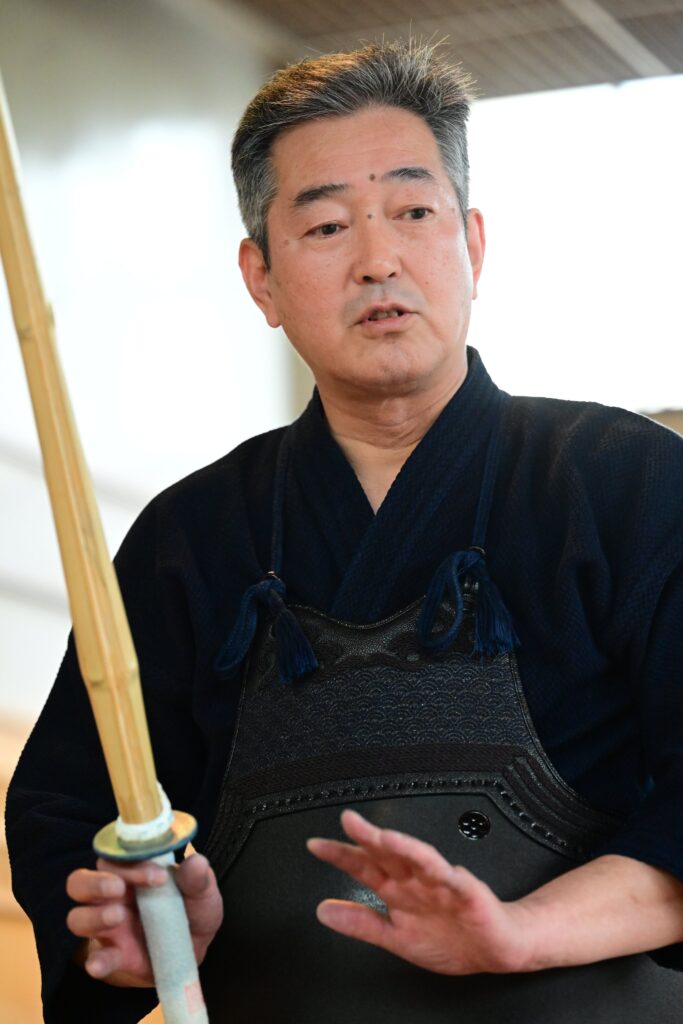
He currently serves as Deputy Chief Kendo Instructor of the Kanagawa Prefectural Police.
Taking the Initiative in Seme and Making Use of Upward and Downward Pressure
Although today’s theme is upward and downward seme, I believe that the higher one’s level becomes, the more important the invisible aspects of kendo—such as mental composure and tactical exchanges—become, rather than techniques that are merely visible. Ultimately, my ideal is to break the opponent’s balance without making my intentions outwardly apparent.
One principle that I value is the teaching of “First the eyes, second the feet, third the spirit, fourth the strength” (Ichigan, Nisoku, Santan, Shiriki). First and foremost is the ability to perceive the opponent’s movements, presence, and moments of opportunity—that is, keen observation and awareness. Next comes footwork, which supports Maai and offensive and defensive movement, followed by the courage and decisiveness to move in without hesitation. Finally, physical strength and conditioning complete the foundation.
To make effective use of upward and downward seme, it is essential to first establish control of the center and take the initiative. Because I am 186 cm tall, I adopt my kamae with a clear understanding of both the advantages and disadvantages that come with my height.
It is commonly taught that the kensen should be directed toward the opponent’s throat or left eye. However, if I position my kensen there, my hands appear comparatively high from my opponent’s perspective, making my kote more vulnerable. Instead, I direct my kensen toward the opponent’s solar plexus. This creates the impression that I am applying pressure from above downwards, making my seme considerably more effective.
Using the Shinogi in Downward Seme
Opportunities for attack vary greatly depending on the opponent. Especially against someone of equal ability, simply applying seme until the opponent freezes and presents an opening is rarely enough to create a scoring opportunity.
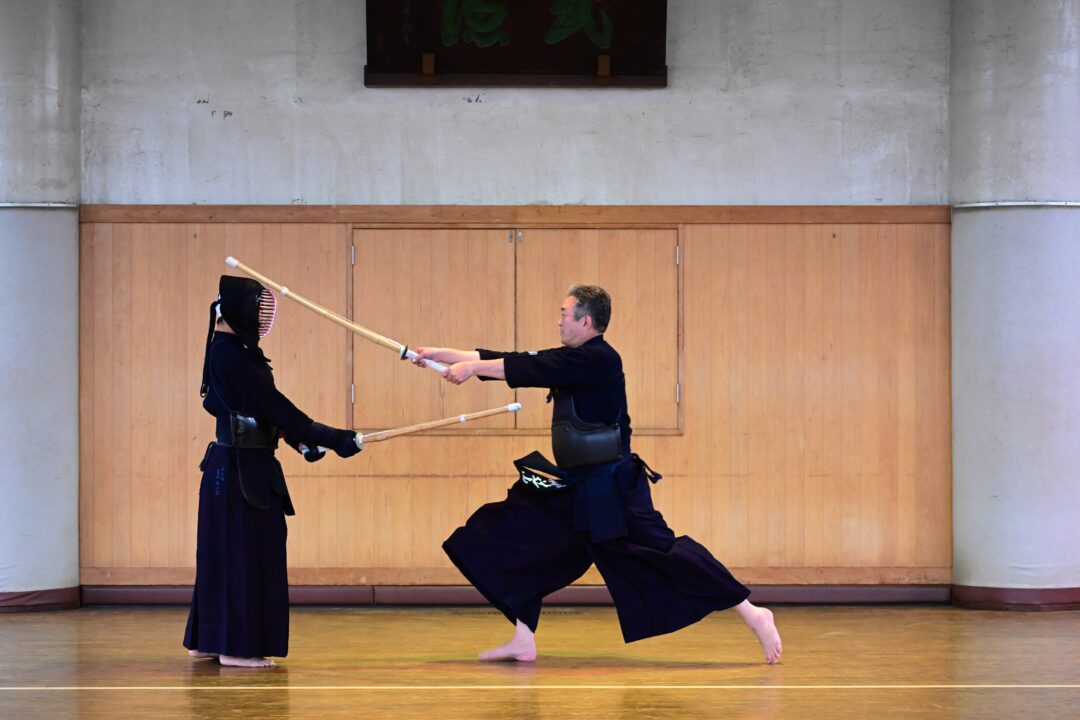
What becomes important in such situations is applying seme in a way that draws the opponent into moving. Because of my height, I consider Debana to be one of the most valuable opportunities. To sense that moment and draw the opponent into moving, I use the omote shinogi, applying pressure as though sliding it downward from above. In doing so, I aim to maintain control of the center while simultaneously displacing my opponent’s center.
At the same time, maintaining constant pressure with excessive force prevents an immediate strike. This is where tenouchi becomes crucial. However, if I keep applying force, I lose the ability to strike instantly. This is where tenouchi becomes crucial. At the decisive moment, I tighten my grip only for an instant, but I never squeeze the shinai tightly. Instead, I keep my hands relaxed enough to transition smoothly into the next movement.
It is also important to keep the movement of the shinai to a minimum—roughly within the width of my body. Even such a small adjustment is enough to create openings for attack. Moving the shinai too much, on the other hand, risks compromising one’s own center.
After taking control of the center with the omote shinogi, I remain just below my opponent’s kensen and observe their reaction. If they press down from above, I strike men. If they raise their hands instead, I strike kote. At that point, I no longer consciously choose the technique—it is selected almost instinctively.
If I were to describe the feeling in my own words, I would say that I apply pressure to my opponent’s hands until the very last moment, and when I strike, I focus on the target as though it were a single point.
Maintaining an Unshaken Mind Leads to Ideal Kendo
The rest of this article is only available for Kendo Jidai International subscribers!