2026.6 KENDOJIDAI
Photography: Nishiguchi Kunihiko
*Unauthorized reproduction or use of any images in this article is strictly prohibited.
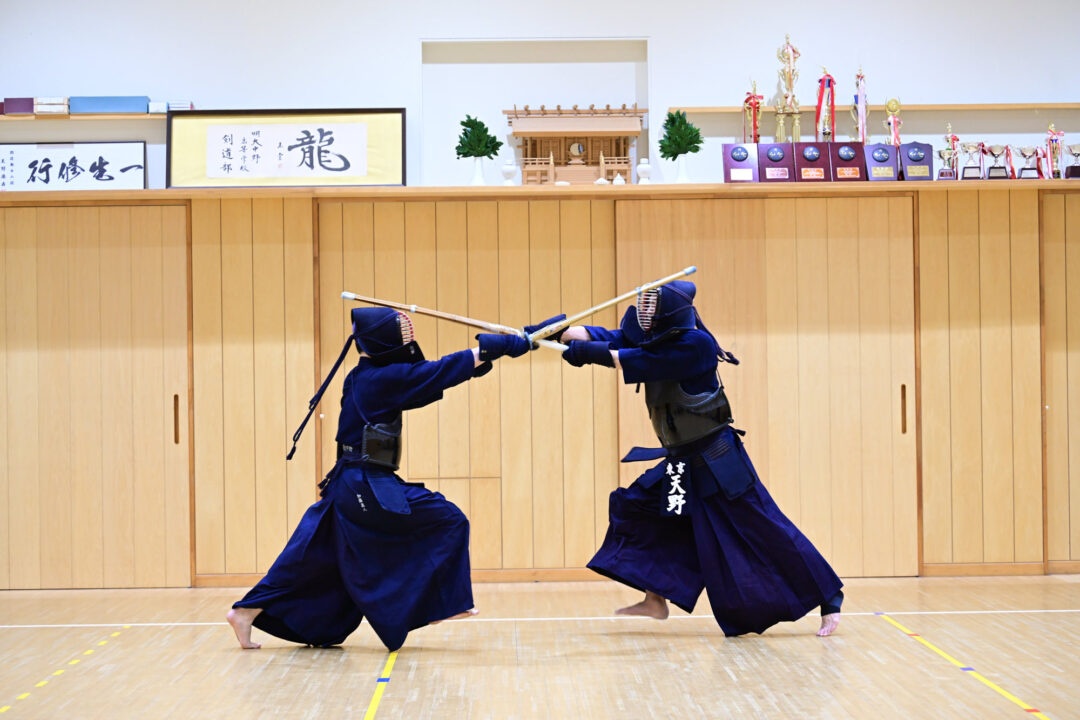
In November 2022, Amano Yasuhisa-sensei successfully passed the highly demanding 8th Dan examination. Built upon the principle of striking without relying on tsugi-ashi, he has helped restore the long-established powerhouse Meidai Nakano High School to national prominence. According to Amano-sensei, performing at one’s best when it matters most depends on mastering correct form and having the confidence to express it fully.
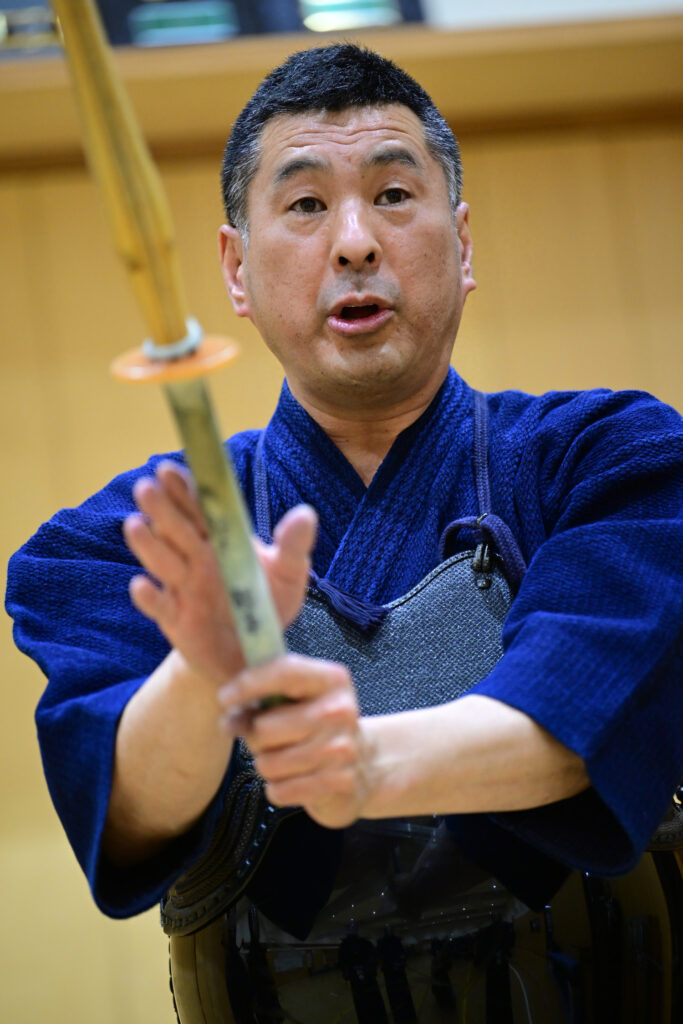
Amano Yasuhisa, Kyoshi 8th Dan
Learning Correct Form Through the Body
During my years at Fukuoka Institute of Technology Joto High School, I was taught by Nakano Tadashi-sensei, and at Tokai University by Ajiro Tadahiro-sensei. From them, I learned the importance of fundamental Kendo and of maintaining footwork that does not allow the left foot to trail behind. Through their instruction, I came to realize that mastering correct form is the shortest path to improvement. That belief continues to guide my practice today as I train alongside my students.
The importance of Kendo that avoids unnecessary tsugi-ashi hardly needs explaining. When the moment of opportunity presents itself, there is no time to bring the feet together before executing a technique. In Kendo, there are four basic forms of footwork—ayumi-ashi, okuri-ashi, hiraki-ashi, and tsugi-ashi. Tsugi-ashi is typically used when striking from a distance slightly beyond issoku-itto-no-maai. However, if this footwork is used excessively, it can develop into a bad habit, causing practitioners to rely on tsugi-ashi even in situations where it is unnecessary.
In Kendo, it is important to eliminate unnecessary movement and strike by the shortest possible path. To do so, one must develop efficient movement through proper footwork and shinai handling. This is why I believe it is essential to learn correct form through the body. There are proper forms for kamae, footwork, and striking. In keiko, one of our primary objectives is first to confirm these forms and then to make them part of ourselves.
Actual competition is an application of these fundamentals. A valid strike cannot be achieved without applying seme and capitalizing on an opening in the opponent. In the pressure of a match, thoughts such as “I want to strike” or “I do not want to be struck” often arise, causing practitioners to break their own kamae. However, when correct form has been ingrained through repeated practice, it becomes possible to identify mistakes and make the necessary corrections.
When teaching, I never tell students simply to “strike faster.” What matters is striking accurately from a correct kamae, using proper shinai handling, cutting through decisively, and carrying the action through to zanshin without interruption. To produce a truly excellent ippon under the extreme pressure of competition, there is no substitute for the steady accumulation of fundamental practice.
At the same time, as the saying junin toiro suggests, no two people can practise Kendo in exactly the same way. While the fundamentals provide a common foundation, it is important for each practitioner to develop and refine techniques that suit their individual strengths. Having a technique you can truly rely on gives you confidence in competition.
At the end of practice sessions at Meidai Nakano, I serve as motodachi and receive kakarigeiko from the students. Through the process of allowing them to strike, I encourage them to think and experiment for themselves by reflecting on maai, opportunities to strike, and the methods they use to execute their techniques.
Injury Leads to Setbacks
Take Care of Your Body
To perform at your highest level when it matters most, consistent and diligent keiko is essential. However, an injury can prevent you from training altogether. At Meidai Nakano, our practice time is limited, so in order to maximize the effectiveness of each session, I emphasize not only proper physical care but also maintaining discipline in both academics and daily life.
During the COVID-19 pandemic, there was a period when regular keiko became difficult. Before the pandemic, I often returned to my alma mater, Tokai University, to practise with the students and instructors there. Once COVID restrictions took effect, however, those opportunities disappeared. As a result, I prepared for the 8th Dan examination primarily by practising with high school students.
During that time, even a mild fever could prevent someone from taking the examination. Because of this, I became especially conscious of managing my health and physical condition. The habits I developed then remain with me to this day.
Establish a Kamae That Allows You to Strike at Any Moment
To learn correct form, one must first establish a proper kamae. Chudan-no-kamae is the foundation of all kamae, and ideally it should place the practitioner in a state where techniques can be executed at any moment without tension or unnecessary effort.
The shinai should be held with the little finger of the left hand positioned at the very end of the tsuka, gripping from above. Pressure is applied in the order of the little finger, ring finger, and middle finger, while the index finger and thumb rest lightly on the handle. Both feet should point forward and be positioned one in front of the other. Personally, I find that placing slightly more weight on the left foot creates better balance, allowing footwork and striking actions to flow more smoothly. By feeling the weight distributed across the entire sole of the foot, one can develop proper tame and push off strongly when the moment comes.
In actual competition, there is always an opponent in front of you, and thoughts such as “I want to strike” or “I do not want to be struck” naturally arise. When this happens, tension accumulates in the upper body, making it difficult to execute techniques smoothly. Likewise, when the desire to strike becomes too strong, the stance often widens, the hands rise, and the left hand loses its proper position. From such a posture, it becomes difficult to produce techniques that satisfy the requirements of a valid strike.
I believe one of the most important goals of daily keiko is to minimize these tendencies as much as possible.
Strike with the Monouchi
Confirm the Correct Path of the Shinai and Strike with Proper Hasuji
The rest of this article is only available for Kendo Jidai International subscribers!