2026.6 KENDOJIDAI
Interview by Yanagida Naoko
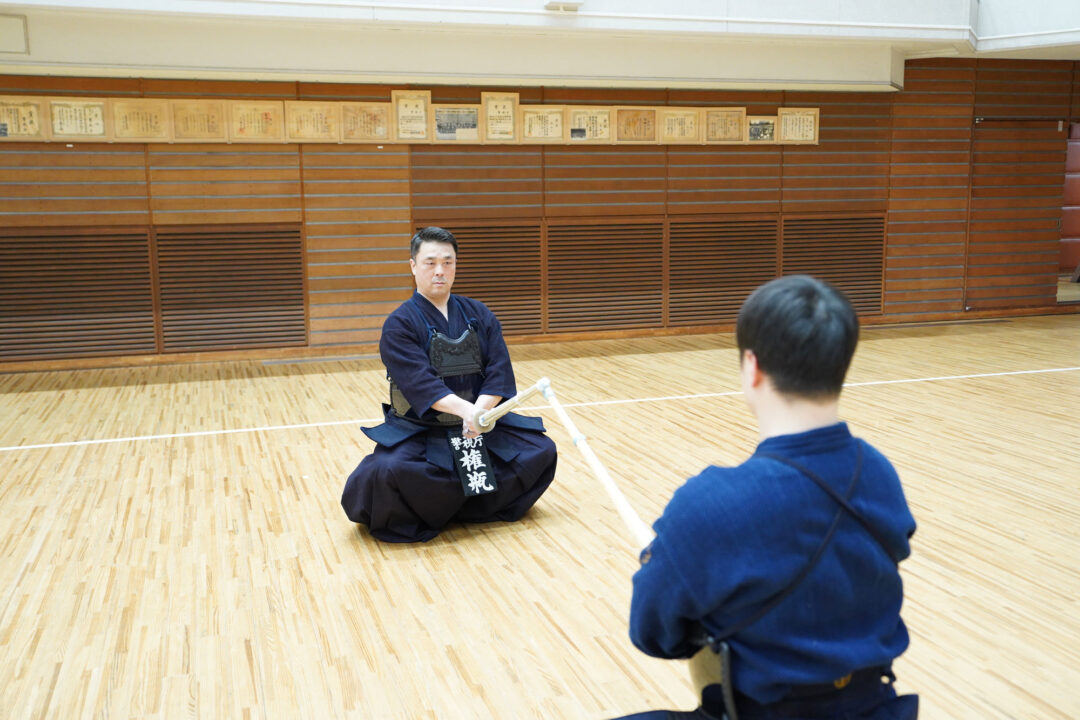
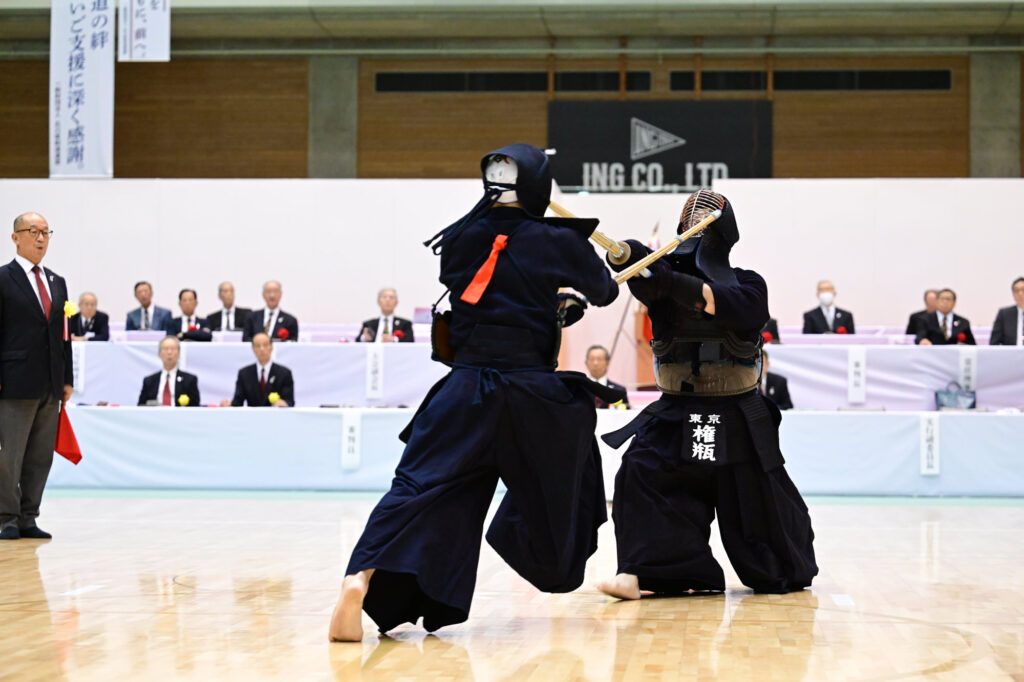
Gonpei Sensei, Kyoshi 8th Dan, distinguished himself in national-level kendo competitions from an early age. After joining the Tokyo Metropolitan Police Department, he achieved numerous successes, including winning the First Division team title at the National Police Kendo Championships. He passed the prestigious 8th Dan examination two years ago, and last year played a key role in leading his team to the final of the National Sports Festival.
One of the most valuable lessons he has learned over the course of his long kendo career is the importance of being fully prepared. To achieve this, he works backward from the date of his target tournament or dan examination, carefully breaking down everything that needs to be done into specific, manageable tasks and completing them one by one. By the time the day of the event arrives, he is able to face it with complete confidence, knowing, “I’ve done everything I could to prepare.”
Gonpei Noriyasu, Kyoshi 8th Dan
I am currently in a position at the Tokyo Metropolitan Police Department where I instruct special kendo trainees, as well as students in the Martial Arts Specialist Training Course who are training to become future kendo instructors. At the same time, I continue to devote myself to my own training during my spare time. On weekday evenings, I am also involved in teaching children’s kendo.
One of the things I emphasize, both when teaching others and when preparing for my own matches, is the importance of being able to approach matches and Dan examinations in the best possible condition.
In order to create that condition, it is important to clarify one’s goals and objectives, and then plan one’s training accordingly. Doing so leads to faster improvement.
I believe that many people who practice kendo set various goals for themselves, both large and small. In my own case, I broadly divide these goals into three categories and reflect them in my training.
- Short-term goals – Specific points to focus on in each training session, such as maintaining a stable kamae.
- Mid-term goals – Objectives for upcoming tournaments or Dan examinations, such as winning the next tournament or passing the next Dan examination.
- Long-term goals – Applying the lessons learned through kendo to society. Kendo is not the end goal, but rather a means to achieve personal growth and contribute to others.
Once these short-, mid-, and long-term goals have been established, the next step is to determine what must be done to achieve each of them.
There is a concept known as periodization, a term commonly used in sports training. It refers to systematically dividing a training program into planned phases, each designed to build toward a specific objective. By progressing through these stages in a structured manner, one is more likely to achieve the desired results. In my own training, I place great importance on the three goal cycles described above.
1. Preparation Phase – Building a Strong Foundation
Throughout the year, the dates of qualifying tournaments and embu demonstrations that I intend to participate in are generally known in advance. With those dates in mind, I assess what aspects of my kendo need improvement and determine where my efforts should be focused. This may involve refining fundamental elements such as kamae and footwork, or expanding my technical repertoire by developing new techniques and approaches to seme.
Once you have a clear understanding of your own strengths and weaknesses, it becomes much easier to identify the areas you need to improve and the most effective methods of training to achieve that improvement.
2. Competition and Dan Examination Phase – Peaking When It Matters Most
In addition to making final technical adjustments, it is equally important to prepare mentally. If you have completed the Preparation Phase thoroughly, you will naturally feel more confident and composed. When unexpected situations arise, you are also more likely to respond calmly because you have already considered in advance how you will react to different scenarios.
3. Transition Phase – Recovery, Reflection, and Setting New Goals
Once an important tournament has concluded, I make a conscious effort not to lose momentum by continuing my training from the very next day. Last year, when I competed in the National Sports Festival, it had been about a year and a half since I passed the 8th Dan examination. In preparation, I worked through practice matches and Uchikomi-geiko, while repeatedly fine-tuning the tactics required for five-member team competition. As a result, I felt I had performed to the best of my ability.
However, after a competition in which you feel fulfilled, it can be surprisingly difficult to refocus your mind. That is why it is important to allow both the body and the mind to recover before entering the next Preparation Phase.
Personally, when my body needs recovery, I usually reduce my training volume—for example, by cutting down the number of practice bouts in a session—rather than taking complete days off. On the other hand, if I feel mentally fatigued, I make a point of taking proper rest.
An important aspect of the Transition Phase is maintaining a lifestyle in which everyday life and kendo remain in harmony. Even during this period, I make a point of continuing my regular routine rather than allowing it to become disrupted.
For me, this also means attending children’s kendo practices whenever possible. As an instructor, I believe I must hold myself to a high standard and lead by example. Interacting with the children continually renews my motivation and helps me maintain a positive mindset toward my own kendo training.
Physical Conditioning
A Well-Prepared Body Leads to Peak Performance
The rest of this article is only available for Kendo Jidai International subscribers!