2026.8 KENDOJIDAI
Interview by Yanagida Naoko
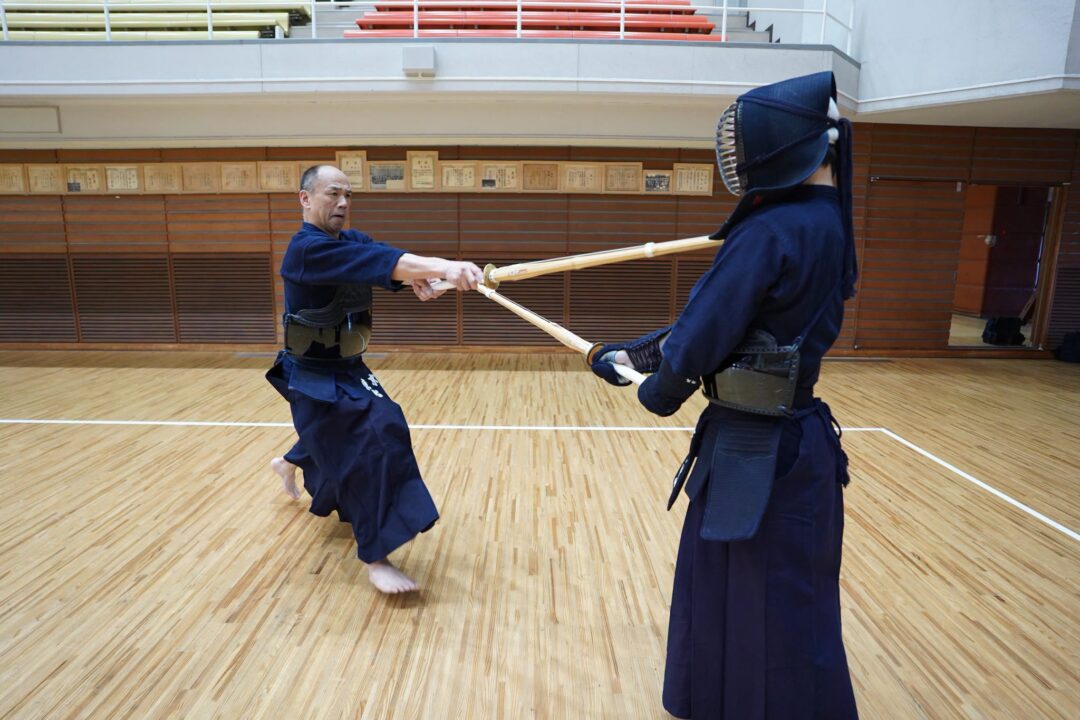
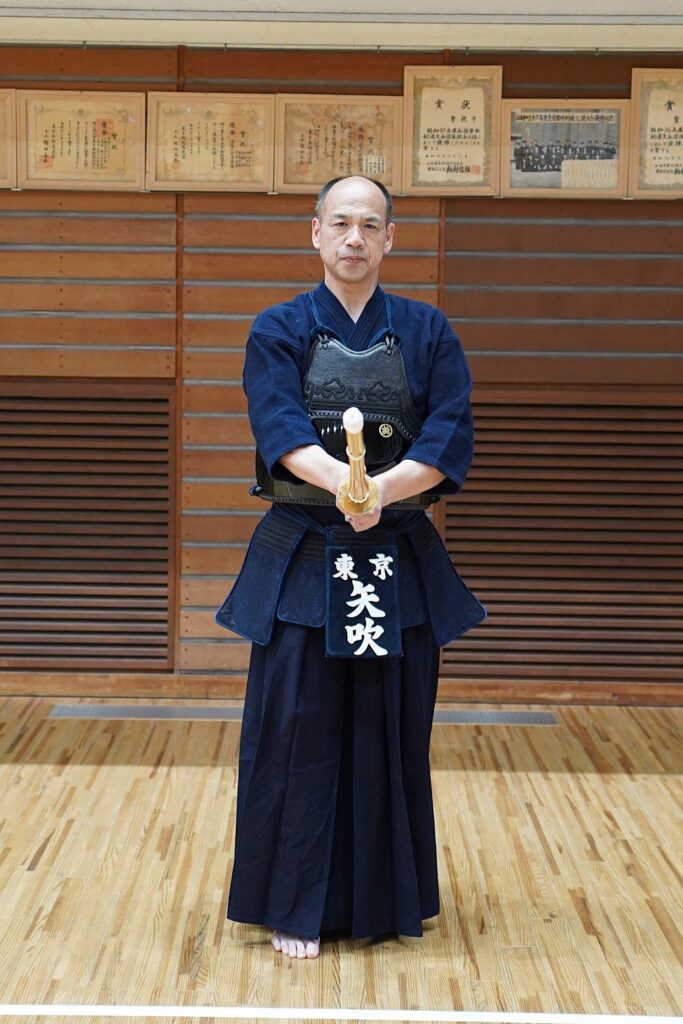
Yabuki Yuji, who serves as an instructor in the Kendo Instruction Division of the Tokyo Metropolitan Police, has continued his study and training as the 18th Soke of Ono-ha Itto-ryu while applying its principles to his Shinai Kendo practice. Yabuki emphasizes the importance of “winning before striking.” We asked him about Joge no Seme—applying pressure high and low, an approach that incorporates the essence of Itto-ryu.
Yabuki Yuji, Kyoshi 8th Dan
I myself have not yet arrived at any definitive answer regarding Joge no Seme, and I continue to experiment with it through trial and error every day. Here, I would like to share what I keep in mind and what I work on in my daily Keiko. I also study Ono-ha Itto-ryu, which I believe has had a major influence on my Kendo today. With reference to some of the teachings of Itto-ryu, I would like to consider the concept of “Joge no Seme.”
When I was 27, I completed my time as a member of the Metropolitan Police Headquarters’ Special Kendo Training Unit and became an assistant instructor at Kitazawa Police Station. At the time, I was struggling with the question of how I should develop my own Kendo from that point onward. It was then that I unexpectedly had the opportunity to meet Sasamori Takemi Sensei, the 17th Soke of Ono-ha Itto-ryu, who passed away in 2017.
Until then, my Kendo had focused almost entirely on visible phenomena. For example, even when trying to take the center, I placed importance only on physically moving the Shinai and had given little thought to the psychological elements involved in the exchange between two opponents. It was Sasamori Sensei who taught me the importance of what cannot be seen.
He taught me that when both opponents apply Seme with the intention of taking the initiative, and the moment for a strike is about to arise, Sen-sen-no-sen means striking at the very instant the opponent is about to attack, before the movement itself has actually begun. (If the opponent happens to be coming for Men, this may result in Kiriotoshi.) After receiving this teaching, I became deeply absorbed in the practice of Itto-ryu.
Ono-ha Itto-ryu was founded by Ito Ittosai during the Muromachi period and was later inherited by Ono Tadaaki. Successive generations of the school served as swordsmanship instructors to the Tokugawa Shogunate. By the Edo period, a system of training that continues into the present day had already been established. One of its defining characteristics is Kiriotoshi, a technique that has become virtually synonymous with Ono-ha Itto-ryu.
In Itto-ryu, there is a teaching: “Win before you strike.” Sasamori Sensei taught me this repeatedly. I believe it expresses just how important everything that happens before entering Issoku Itto no Maai is. To enter striking distance despite the risk involved, you must first have “won.” In the exchange of Seme from Toma to Issoku Itto no Maai—or, more precisely, in the process of applying Seme from Shokujin no Maai into Kojin no Maai—it is essential to use the Kissaki to control the opponent’s centerline. Therefore, in order to “win before striking,” an important element is learning Joge no Seme and using it to gain control of the centerline.
So how do we gain control of the centerline? More specifically, how do we actually create this state of having “won”?
This is how I understand it:
1. Take the Initiative
The rest of this article is only available for Kendo Jidai International subscribers!